Ellis Abel & The Scary Playground
Book 2 in the Ellis Abel Learns series · A Reject Mediocrity Story · Ages 3–8 · A children's book about courage, belonging, and feeling different
"You don't belong. You're not like them." What do you do when a tiny voice says you don't fit in?
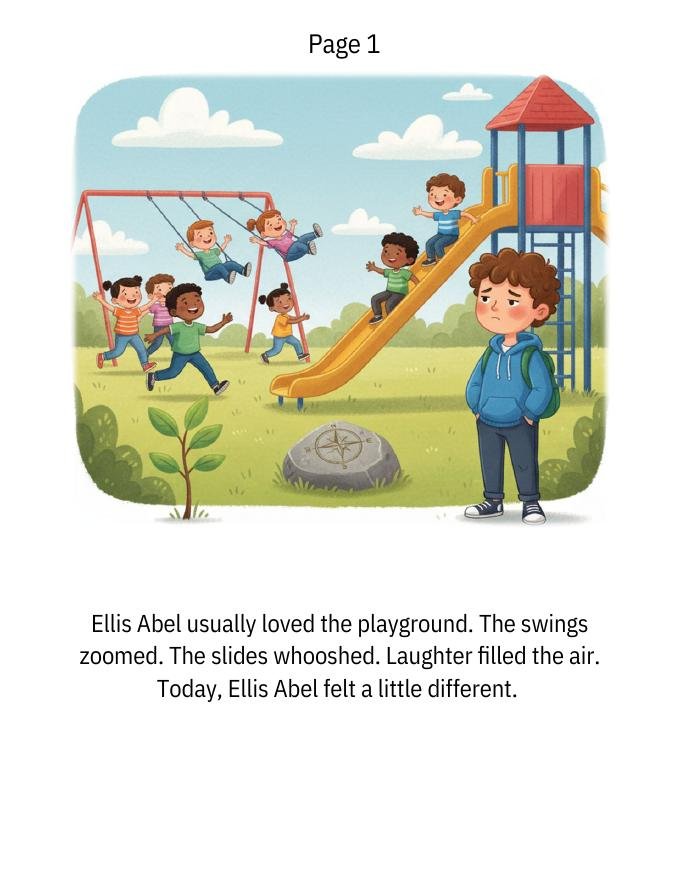
Ellis Abel usually loves the playground, but today a tiny voice in his head whispers, "You don't belong. You're not like them." Sitting alone on a bench, he tells Dad the hard truth: "I feel different. Like I don't fit in, and it makes me sad." Dad shares the true story of Musashi — a boy the other kids laughed at, who practiced every day, fought his biggest battles against his own fears, and became the greatest Samurai of all time. Ellis Abel takes a deep breath, walks toward the kids even though he's scared, and discovers that feeling different doesn't mean you don't belong.
Part of a series created especially for neurodivergent children — this story frames autism as a superpower, showing kids that being different is a source of strength. It supports emotional regulation, self-advocacy, and social courage: naming the feeling, borrowing a hero's bravery, and taking one wobbly-but-clear first step ("Hi! I am Ellis Abel").
Buy on AmazonMeet the Characters
- Ellis Abel — a boy who feels different at the playground and finds his brave first step
- Dad — who listens with a hug first, then shares the story of Musashi
- Musashi — the real-life Samurai who was laughed at as a boy and fought his greatest battles against his own fears
What Kids Learn
- Feeling different doesn't mean you don't belong — "He did belong. Because he was brave. Because he was kind."
- The biggest battles aren't with other people — they're with your own fears, like being scared or not feeling good enough.
- Brave means doing it while scared: Ellis Abel walked toward the kids even though his heart was thumping.
- Victory over self: practice every day, one percent better, just like Musashi.
- Naming a hard feeling out loud ("I feel different") is the first brave step.
The Story Within the Story
Dad retells the true story of Miyamoto Musashi — laughed at as a boy, exiled to the cold mountains, he practiced daily, battled his own fears of failure and insecurity, and returned strong, calm, and brave. Five hundred years later he's remembered as the greatest Samurai of all time.
6 Bonus Activity Sheets Included
Find Your Superpower!My Super Self drawing pageI Am Brave WordsearchBattle the Feelings Ghosts!One Time I Was Brave writing promptThe Samurai Scavenger Hunt
Ready for home, classroom, and counseling use — each sheet includes a parent/teacher tip.
Frequently Asked Questions
- What age is Ellis Abel & The Scary Playground for?
- It's written for children ages 3–8 — a read-aloud for preschoolers and an early reader for K–2, with gentle pacing that works especially well for neurodivergent readers.
- What does this book teach?
- Courage and belonging: that feeling different doesn't mean you don't belong, that the biggest battles are against your own fears, and that brave means taking the first step even while scared.
- Is this book about autism?
- Yes — the story portrays autism as a superpower. Ellis Abel feels different at the playground, and through the story of Samurai Musashi he learns that being different is a source of strength, not a reason to stay on the bench.
- Who is Musashi?
- Miyamoto Musashi was a real Japanese swordsman remembered 500 years later as the greatest Samurai of all time. In the book, Dad retells his story kid-level: laughed at as a boy, he practiced daily, conquered his own fears, and earned victory over self.
- Does it include activities?
- Yes — bonus activity sheets including Find Your Superpower!, the I Am Brave Wordsearch, Battle the Feelings Ghosts!, a bravery writing prompt, and the Samurai Scavenger Hunt.
Explore Related Topics
More in the Series
Ellis Abel & The Big Test
Lesson: test anxiety
Ellis Abel & The Red Block
Lesson: frustration and problem-solving
Ellis Abel & The Disciple
Lesson: mentorship and character
Ellis Abel and the Two Wolves Within
Lesson: self-talk and choices
Ellis Abel & The Magic Triangle
Lesson: growth mindset